
Welcome In
Fifteen years coaching. Three kids of my own: Gracie, Holly, and Coh. More car rides home than I could ever count.
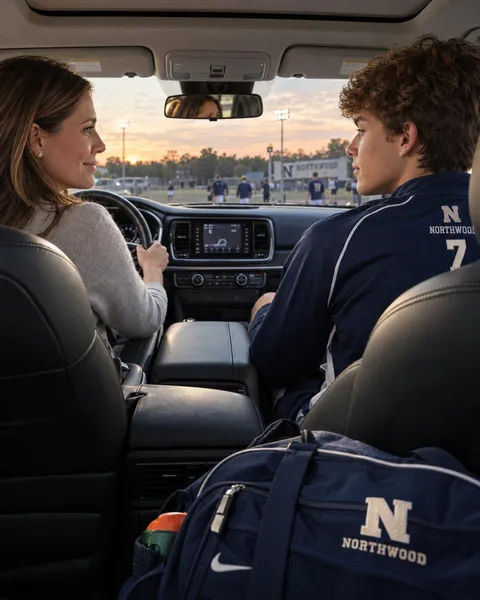
Somewhere in all of that, I noticed something most of us miss. The most important fifteen minutes of your athlete's week don't happen on the field. They happen afterward, in the seat next to you, while the adrenaline is still leaving their body and the whole evening is riding on whatever you say first.
I learned that the hard way, in a truck, on a cold spring night, from my own son. You'll read that story next. It's the one that started everything I now teach.
This guide is what I wish someone had handed me back then. It isn't a system, and it won't cover every situation your family will face. It's the truth about what's happening in that car, and a handful of things that genuinely help, whether your kid plays baseball, hockey or soccer, dances, or competes in another sport.
There's more waiting inside the Long Game Parent Academy, for whenever you're ready to go further. But this guide, on its own, can change your very next drive home.
Buckle up.
Why the Car Ride Home Matters
Coh was twelve. Cold spring night, the kind where you can see your breath in the dugout. He struck out three times.
We got in the truck. Heater blasting. Neither of us said a word for a while.
Then I said it. "You've got to want it more than that."
He looked out the window. Then, quietly: "I am trying, Dad."
Those words broke something open in me. He hadn't been dogging it. He'd had a bad night, the kind every athlete has. And in the fifteen minutes he needed me most, I'd handed him a verdict instead of a seat belt.
That truck is where everything I now teach began.
Ask a room full of grown former athletes what they remember from their playing days, and almost nobody starts listing plays. They remember how it felt. They remember whether the car was safe to sit in after a hard night. Not the score. Not the stats. The weather inside that car.
Pause & reflect
What's the last car ride home you wish you could redo?
“You don't get many championship seasons. You get a few thousand ordinary car rides. This guide is about those.”
The First Five Minutes
Think of these time windows as a reminder to slow down, not a clock to follow. Every athlete settles differently. Follow your child’s readiness.
Your athlete just competed in front of people they care about. Their nervous system is still coming down off it, win or lose. That's not attitude. That's biology, and biology has a timeline.
0–5 minutes · Give them room
Say nothing.
The nervous system is still in fight-or-flight. No feedback lands as information here, not even the accurate, well-meaning kind. It lands as threat. Put music on. Look ahead. Let it be quiet.
5–10 minutes · Follow their lead
Follow their lead.
Things are starting to settle. If they want to talk, let them start it. Ask about them, not the game. "How are you feeling?" goes further than "What happened out there?"
10–15 minutes · Make room for conversation
Real conversation is possible.
If it's going to happen, this is when. The real coaching still doesn't belong here. Save it for tomorrow at dinner. The same feedback, given too early, is criticism. Given at the right time, it's coaching.
Give them room to settle. Stay close.
After competing, your athlete may still feel wound up, tired or overwhelmed. Finding words for what happened can take time. A quiet ride can give them room to catch their breath without having to explain themselves straight away.
Giving them space means staying warm and available. You can say, “We don’t have to talk about the game. I’m here if you want to.” Then follow their lead. If they want to talk, listen. If they need quiet, let them have it. There is no exact minute when they should be ready.
After a Great Game
A win feels like an easy car ride. It isn't always. How you celebrate teaches your athlete as much as how you comfort. Praise the result, and you've taught them the result is what you value. Praise the effort underneath it, and you've taught them something that survives a losing season.
"I love watching you compete."
Takes the result out of it. Your enjoyment of them was never about the scoreboard.
"You worked really hard for that."
Names the part they actually controlled.
"I'm proud of how you handled that."
Finds the character in it, not just the outcome.
Try saying this
- What did that feel like out there?
- What are you proud of tonight?
- What do you want for dinner?
Try to avoid
- You're finally playing like you should.
- See what happens when you try?
- Now let's keep that up every game.
Those last three sound like praise. They're pressure with a bow on it. They quietly attach your approval to the next performance. Keep the celebration about your kid, not the standard they now have to keep hitting.
After a Tough Game
By the time your athlete reaches the car, they've replayed every mistake. They are not waiting for your breakdown of what went wrong. They're hoping you're not about to confirm what they already fear is true: that they disappointed you.
The hardest part is resisting the urge to coach. You saw exactly what went wrong. That instinct isn't the problem. The timing is.
Try saying this
- That looked hard. How are you feeling?
- I'm proud of how you kept going.
- What do you want for dinner?
Try to avoid
- What were you thinking on that play?
- Why weren't you more aggressive?
- You've got to want it more than that.
A story · The Ottawa slump
My son went cold for weeks one fall. My first instinct was to fix it: more reps, more video, more analysis. None of it worked. What actually helped was stepping back and trusting that a slump is a season doing what seasons sometimes do, not an emergency. It ended the way most slumps end: gradually, and not because of anything I engineered.
A quiet car isn't a failed car. Sometimes it's the safest one you'll have all week.
When Your Athlete Starts Criticizing Themselves
"I suck." "I let everyone down." "I'm terrible." "I'll never make this team."
The instinct is to argue with it, to list the reasons it isn't true. Most of the time, that backfires. Your athlete isn't asking for a debate. They're testing whether it's safe to feel this bad out loud, in front of you.
Try saying this
- That sounds like a hard thing to carry.
- One bad game isn't the whole story.
- I'm still on your team, always.
Try to avoid
- Don't say that, you're great.
- You're being dramatic.
- Well, you did miss a lot of shots.
Why it matters
Self-talk after a hard game is where a young athlete's story about themselves gets written. Correct it too fast, and you teach them to hide it next time. Sit with it instead, and you teach them the story isn't finished and that you'll be there for the next chapter either way.
When They Hardly Played
This is one of the hardest drives you'll have. No play to talk about, just a kid who watched most of the game from the bench, or the end of it, wondering if anyone noticed.
The instinct is to solve everything: playing time, the coach's decisions, what needs to change. Resist that tonight. What they need first is someone who noticed how hard it was.
"That had to be frustrating. I thought you handled it well."
Names the feeling before anything else gets discussed.
"I know that was hard to sit through."
Validates the difficulty without minimizing it.
"You're still part of this team, minutes or not."
Ties belonging to who they are, not to playing time.
"What do you want for dinner?"
Sometimes the kindest move is simply forward.
If a playing-time conversation needs to happen with a coach, let it happen later, once things are calm and it's a planning conversation instead of a wound being pressed on.
Tonight your job is small. Let them know the bench didn't change how you see them.
When They Make a Big Mistake
The missed basket at the buzzer. The dropped pass with a chance to win. The serve into the net on match point. The error in the final inning. Different sports. The same sinking feeling of believing you let everyone down.
One moment can feel like the whole game to your athlete. Help them remember it isn’t.
What you're protecting isn't their record. It's the line between what they did and who they are. A mistake is something that happened. It is not a character reading.
A story · Scott the coach
Old school. Direct. Not much for softening things, yet the players loved him. I asked my son why. He thought about it. "He treats us like we can handle things," he said. "Like we're not going to break." My own instinct to soften things had quietly told him the opposite. High standards and genuine safety were never opposites. The best coaches I've known hold both at once.
And if the mistake brings tears, say nothing. Sit with them. A hand on the shoulder does more than any sentence you could reach for.
A mistake is a moment. Not a mirror.
When They Don’t Want to Talk
A Story: The Combine
A seventeen-year-old I know, Nick, had a skill assessment that didn't go the way he'd hoped. Afterward, he went completely quiet. Not crying, just quiet, in the way that means something is being worked through underneath.
His father sat next to him and said nothing. No advice. Nothing to fix. Just present, letting the silence be enough. That was exactly the right call.
“Not every conversation has to happen right now.”
How long is too long?
A quiet drive is normal. A quiet week is worth noticing.
If the quiet continues and starts showing up at dinner, with friends or during things they used to enjoy, it may be about more than one hard game. It's worth a gentle check-in, not an interrogation. Something as simple as "You've seemed quiet lately. I'm here whenever you want to talk" does more than it looks like it does.
Silence from your athlete is not a locked door. Respecting the quiet is its own form of conversation, one that says, without a word, I'm still here, whenever you're ready.
The Questions That Build Confidence
The right question rarely mentions the scoreboard. It points your athlete toward the parts of the night that were actually theirs.
"What felt good today?"
Focuses on how playing feels, rather than the outcome. That is where the love of the game lives.
"What did you learn out there?"
Turns the game into information, not a verdict.
"What are you proud of?"
Trains them to find their own pride, instead of waiting on yours.
"What's one thing you'd like to keep working on?"
Puts them in charge of their own development, not you.
"What was the most fun part of today?"
Keeps the fun in view. It is the reason they keep playing at all.
None of these ask for a number. They ask your athlete to notice their own experience.
Try one of these tonight. Just notice what comes back.
The Questions to Avoid
These rarely come from a bad place. They come from caring, and from having watched the whole game. But timing changes everything a question means.
"Why did you strike out?"
Asks for an explanation before they've processed what happened.
"What happened?"
Feels like an investigation, not a conversation.
"Why didn't you catch that?"
There is no answer that doesn't feel like a confession.
"Were you nervous?"
Plants a label they may not have reached for on their own.
Every one puts your athlete on the stand before they've had a chance to just be a kid again. The same words, asked tomorrow at dinner, might be exactly right.
Notice which of these has slipped out before. No judgment. Just notice.
Three Things Every Athlete Needs to Hear
“I love watching you compete.”Says your enjoyment of them was never tied to the result.
“I’m proud of who you’re becoming.”Names the person, not the performance. The part that outlasts every season.
“I’m always on your team.”Tells them they’ll never have to face a hard night alone.
Said once, these are nice things to hear. Said consistently, across years and seasons and ordinary Tuesdays, they become something your athlete carries: a floor under them that no bad game can crack.
Say these words even when nothing went wrong. Especially then.
One Conversation Can Last a Lifetime
My son was nine. Right field, house league, nothing on the line. Between pitches, he started doing the floss, just a kid dancing around out there, completely unburdened, in cleats two sizes too big.
I laughed out loud. Then I felt something I didn't expect. Gratitude. In that moment he wasn't an athlete with a development plan. He was a nine-year-old having the time of his life. That is the thing worth protecting, before anything else.
The goal was never to raise a great athlete. It's to raise a healthy, confident young person.
One day, the game ends. A father I know once told me about that exact drive. His son sat quietly, looking out the window, until he finally said, "That was a good run." Five words. Somehow, it was everything.
The game will end. The relationship won't.
That is the long game.
The Glovebox Card
A one-page version of this whole guide. Screenshot it. Keep it in the car.
The next ride home
A few words to keep close when the game is over. Read this before you leave, then follow your athlete’s lead.
The first five minutes
Give them room. Let it be quiet unless they want to talk.
Five phrases to keep close
- “I love watching you compete.”
- “What do you want for dinner?”
- “That looked hard. How are you feeling?”
- “You worked really hard today.”
- “I’m proud of how you handled that.”
Leave out of the car
“What happened out there?”
“Why weren’t you more aggressive?”
“You’ve got to want it more.”
“Were you nervous?”
When they cry
Be there. You don’t have to fill the silence or fix the feeling.
The feedback can wait.The relationship can’t.
The Journey Continues
This guide is only the beginning. If you’ve made it this far, you already know the car ride home is a good place to start. But it’s one moment in a much longer season of raising an athlete.
Inside Long Game Academy, we go deeper into the moments that keep coming up: confidence, pressure, playing time, difficult conversations, and the days your athlete isn’t sure they want to keep going.
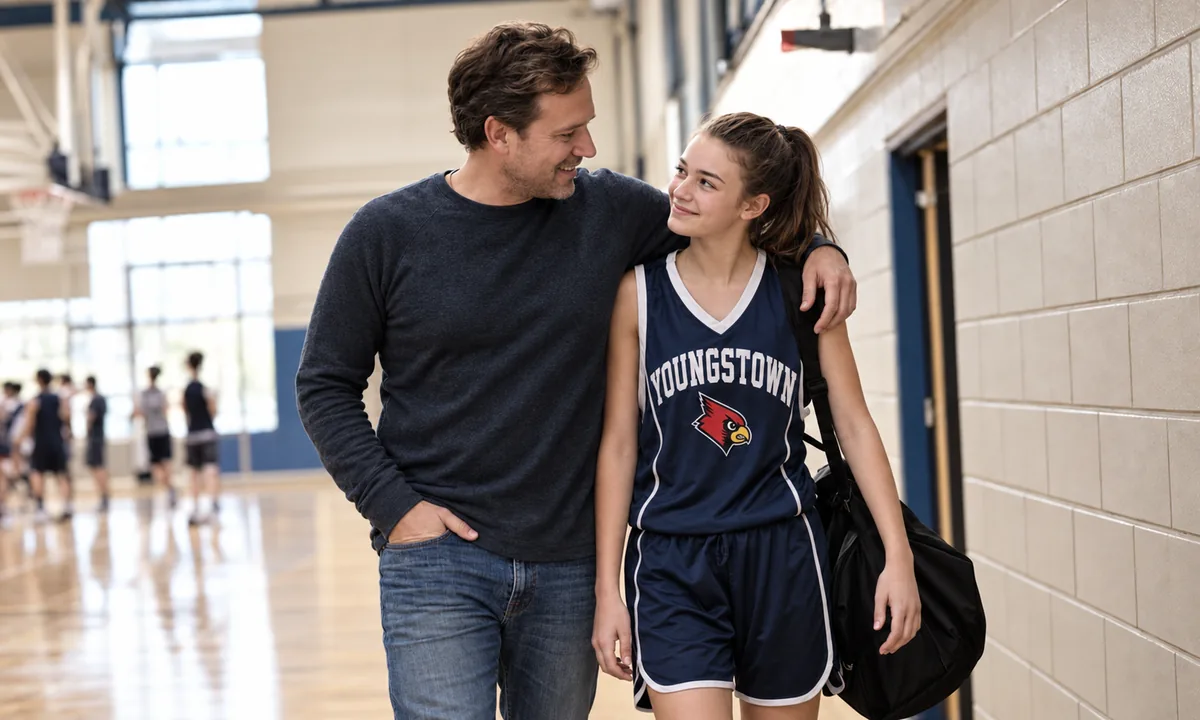
Support for the next hard moment.
Twelve parent development modules, with stories, reflections, and practical language you can use with your athlete.
You don’t have to change everything at once. Start with the moment you’re in.
Explore the full courseSee what’s included and enroll at Long Game Academy.
The game will end.
The relationship won’t.
With you through every season,
Your Long Game team